
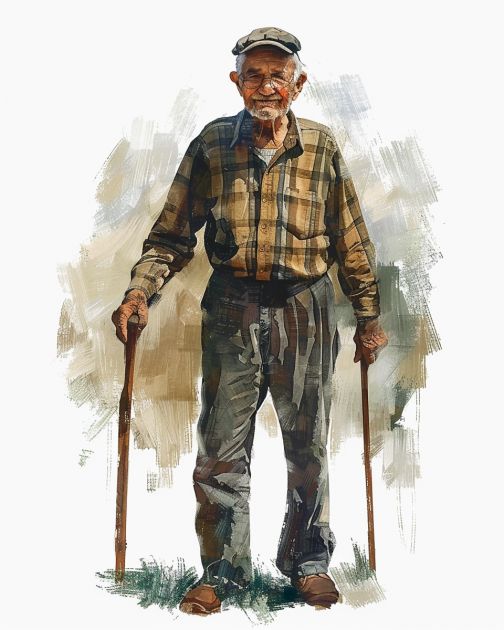
As individuals age, it's common to notice changes in posture. It's not uncommon for older adults, like your grandpa, to develop a forward head posture, rounded shoulders, or a general stoop. These changes can be attributed to a variety of factors such as loss of muscle strength, reduced flexibility, and changes in the spine. While these are natural aspects of aging, they can still impact balance, mobility, and even lead to discomfort or pain. However, there is good news.
There are natural exercises that can help improve posture without the need for professional physical therapy sessions. Maintaining good posture is not only beneficial for appearance but can also alleviate pain, improve breathing, and increase energy levels.
Advertisement
1. Chin Tucks
To counteract a forward head posture, chin tucks can be quite effective. This exercise can be done sitting or standing.
1. Begin by sitting upright in a chair or standing with your back against a wall.
2. Gently tuck your chin down towards your neck, creating a double chin. Don't tilt your head forward.
3. Hold for 5 seconds and then return to a neutral position.
4. Repeat this exercise 10 times, multiple times a day.
1. Begin by sitting upright in a chair or standing with your back against a wall.
2. Gently tuck your chin down towards your neck, creating a double chin. Don't tilt your head forward.
3. Hold for 5 seconds and then return to a neutral position.
4. Repeat this exercise 10 times, multiple times a day.
2. Shoulder Blade Squeezes
This exercise helps in strengthening the muscles around your shoulder blades and upper back, promoting good posture.
1. Sit or stand with your back straight.
2. Pull your shoulder blades towards each other as if you were trying to hold a pencil between them.
3. Hold the squeeze for 5 seconds and then relax.
4. Perform this exercise 10 times, twice a day.
1. Sit or stand with your back straight.
2. Pull your shoulder blades towards each other as if you were trying to hold a pencil between them.
3. Hold the squeeze for 5 seconds and then relax.
4. Perform this exercise 10 times, twice a day.
3. Wall Angels
Wall angels are great for overall posture improvement, especially if your grandpa has rounded shoulders.
1. Stand with your back flat against a wall, feet about four inches away.
2. Extend your arms out to the sides, with elbows at a 90-degree angle, and press your arms back against the wall.
3. Slowly slide your arms up and down, while keeping contact with the wall.
4. Do this for 10-15 repetitions, once or twice a day.
1. Stand with your back flat against a wall, feet about four inches away.
2. Extend your arms out to the sides, with elbows at a 90-degree angle, and press your arms back against the wall.
3. Slowly slide your arms up and down, while keeping contact with the wall.
4. Do this for 10-15 repetitions, once or twice a day.
4. Thoracic Extension
Often with aging, the upper back becomes more hunched. Thoracic extensions can help with this issue.
1. Sit in a chair without a back, or stand.
2. Place your hands behind your head, lightly supporting your neck.
3. Extend your upper back backwards, bending at the thoracic spine (upper back) only.
4. Hold for a few seconds before returning to the starting position.
5. Repeat 10 times, once or twice a day.
1. Sit in a chair without a back, or stand.
2. Place your hands behind your head, lightly supporting your neck.
3. Extend your upper back backwards, bending at the thoracic spine (upper back) only.
4. Hold for a few seconds before returning to the starting position.
5. Repeat 10 times, once or twice a day.
5. Cat-Cow Stretch
The cat-cow stretch is a gentle exercise that increases flexibility in your grandpa's spine and abdomen.
1. Start on your hands and knees in a tabletop position.
2. Arch your back up like a cat and then dip it down like a cow.
3. Alternate slowly between these positions, moving with your breath.
4. Do this for 1-2 minutes, at least once a day.
1. Start on your hands and knees in a tabletop position.
2. Arch your back up like a cat and then dip it down like a cow.
3. Alternate slowly between these positions, moving with your breath.
4. Do this for 1-2 minutes, at least once a day.
Advertisement
It's important to note that although these exercises can be helpful, they are not a substitute for medical advice or physical therapy prescribed by a healthcare professional. If your grandpa is experiencing significant pain or has any underlying health conditions, it's best to consult with a doctor before starting any new exercise regimen. Additionally, remind your grandpa that consistency is key. Making these exercises a routine part of his daily life can make a significant impact on improving his posture over time.